Coagulated Meaning: Understanding Blood Clotting
Blood coagulation, or clotting, is your body's remarkable ability to stop bleeding. It's a complex process involving numerous proteins and cells that work together to form a blood clot, sealing damaged blood vessels and preventing blood loss. Understanding this process—the "coagulated meaning"—is crucial for comprehending various health conditions and treatments.
The Amazing Blood Clotting Cascade: A Team Effort
Think of blood clotting as a highly orchestrated cascade, a chain reaction involving multiple steps. Injury triggers two main pathways:
Extrinsic Pathway: This rapid pathway starts when tissue factor, released from damaged tissue, initiates a series of reactions leading to thrombin activation.
Intrinsic Pathway: This slower pathway begins when blood contacts materials like collagen exposed in damaged blood vessel walls. This also ultimately leads to thrombin activation.
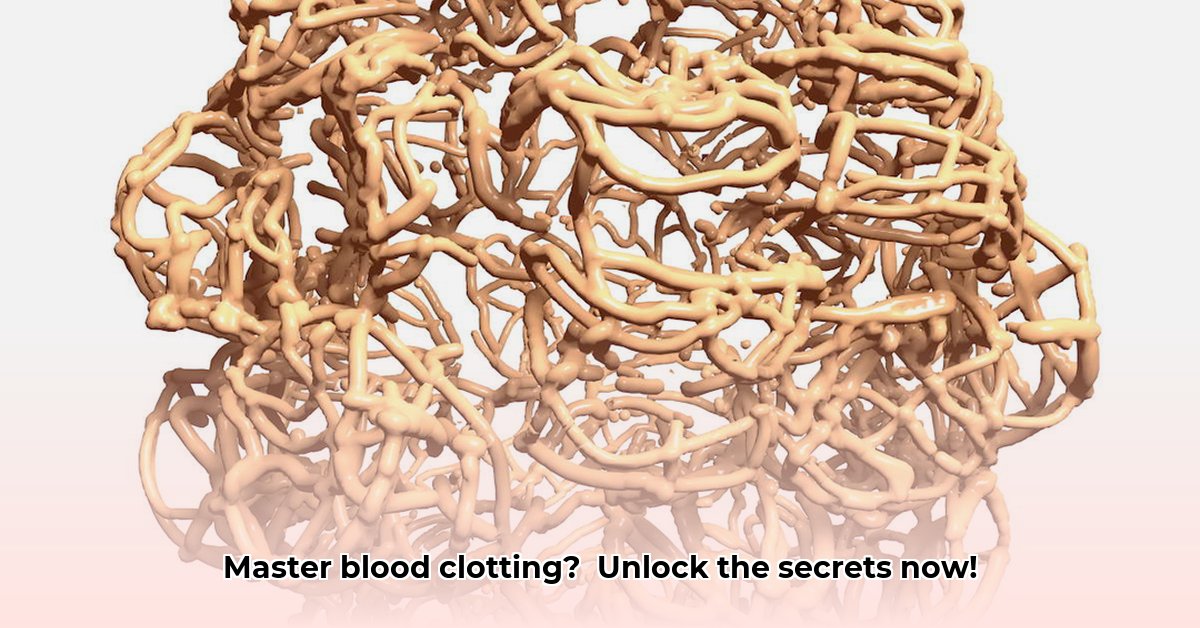
Both paths merge into a common pathway, culminating in thrombin converting fibrinogen (a soluble protein) into fibrin (an insoluble protein). Fibrin forms a mesh-like structure that traps blood cells, platelets, and other components, forming a stable blood clot – the physical embodiment of the "coagulated meaning".
Did you know? The entire clotting cascade, from injury to clot formation, can take as little as a few minutes. Isn't that amazing?
Keeping the Clotting Cascade in Check: A Delicate Balance
The body possesses sophisticated regulatory mechanisms to prevent excessive clotting or uncontrolled bleeding. These natural "brakes" on the clotting cascade include proteins such as antithrombin and protein C, which actively inhibit components of the clotting process. This balance ensures clotting occurs only when and where it's needed – a vital aspect of the "coagulated meaning". Without this delicate regulation, dangerous clots could form in blood vessels (thrombosis), or conversely, significant bleeding could occur.
When Things Go Wrong: Blood Clotting Disorders
Disruptions to this delicate balance can lead to various coagulation disorders. For instance:
Haemophilia: This inherited condition causes prolonged bleeding due to deficiencies in specific clotting factors (like Factor VIII, in haemophilia A, or Factor IX, in haemophilia B).
Thrombophilia: This encompasses conditions that increase the risk of excessive clot formation, potentially leading to dangerous clots in veins (deep vein thrombosis) or arteries.
These disorders highlight the significance of a tightly regulated "coagulated meaning" and the consequences when it's impaired.
Diagnosing and Treating Clotting Problems: Tools and Techniques
Diagnosing clotting problems involves blood tests that assess various aspects of the clotting cascade. These include:
- Prothrombin Time (PT): Measures the extrinsic pathway.
- Activated Partial Thromboplastin Time (aPTT): Measures the intrinsic pathway.
- International Normalized Ratio (INR): Standardizes PT results for consistent interpretation, particularly for patients on anticoagulant medication.
Treatments vary depending on the disorder. Anticoagulants (like warfarin or heparin) slow clotting, useful for preventing excessive clot formation. Thrombolytics (like tissue plasminogen activator or tPA) dissolve existing clots, vital in emergencies like strokes.
The Future of Coagulation Research: Ongoing Discoveries
Research into blood coagulation is ongoing, focusing on:
- Developing more effective and safer anticoagulants.
- Exploring personalized medicine approaches to tailor treatments to individual patients.
- Improving diagnostic tools for faster and more accurate diagnoses.
This ongoing work continues to deepen our understanding of the "coagulated meaning" and its clinical significance.
Key Players in the Coagulation Cascade
This table summarises key players in the coagulation cascade:
| Factor | Role | Pathway(s) |
|---|---|---|
| Tissue Factor | Initiates the extrinsic pathway | Extrinsic |
| Factor VII | Activates Factor X in the extrinsic pathway | Extrinsic |
| Factor X | Activates prothrombin to thrombin | Both |
| Thrombin | Converts fibrinogen to fibrin | Common |
| Fibrinogen | Forms the fibrin clot | Common |
This comprehensive overview reveals the complexity and clinical importance of blood coagulation. The “coagulated meaning” is more than just a biochemical process; it represents a vital system for maintaining health and well-being.